60. October salon | Hope is a Discipline
RECORD OF THE TERMITE LANDSCAPE
Talk with artistic duo doplgenger
Wednesday, 13 November at 6 pm
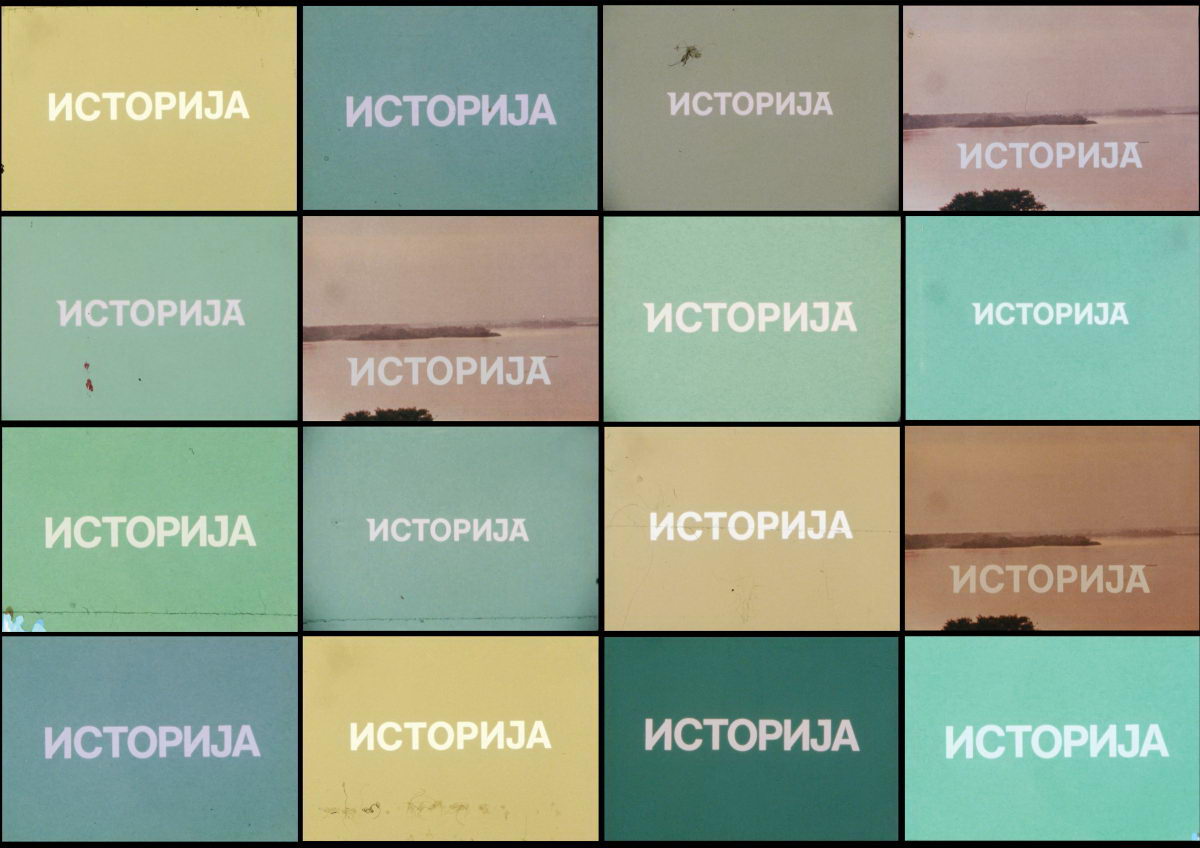
"Record of the Termite Landscape" (2024) is a two-channel video installation displayed as part of 60th October Salon and the exhibition Hope is a discipline curated by Lina Džuverović, Ana Knežević and Emilia Epštajn. By combining newly-recorded and archival material, the doplgenger duo (Isidora Ilić and Boško Prostran) reconsiders representation of the “deep history” of minerals, as well as representation of the political history of the 20th Century.
"Record of the Termite Landscape" is a video essay in which the authors observe images of socialist miners of the past and compare this past with the hidden representation of mining in capitalist society. By questioning the materiality of their own approach and position, the authors attempt to penetrate the future horizon outside media spectacle, simultaneously questioning images of the past. With its very title, the work evokes the eponymous poetry collection by Yugoslav revolutionary surrealist Oskar Davičo, in which the poet attempts, through an artistic action and by using poetic means, to create new relations, phenomena and things, or – by dissolving existing ones – to imbue them with a new sense and meaning.

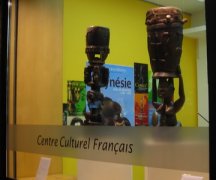
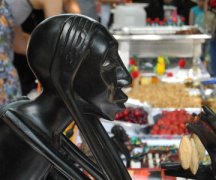
By placing scenes of modern mining and the archival educational TV programme from the “Anticolonial Struggle” series in dialogue with the permanent exhibition of the Museum of African Art in 1977, doplgenger creates a space for new interpretations and critical understanding of cultural politics, global economy and education here and today.
Entrance free
More about artistic duo
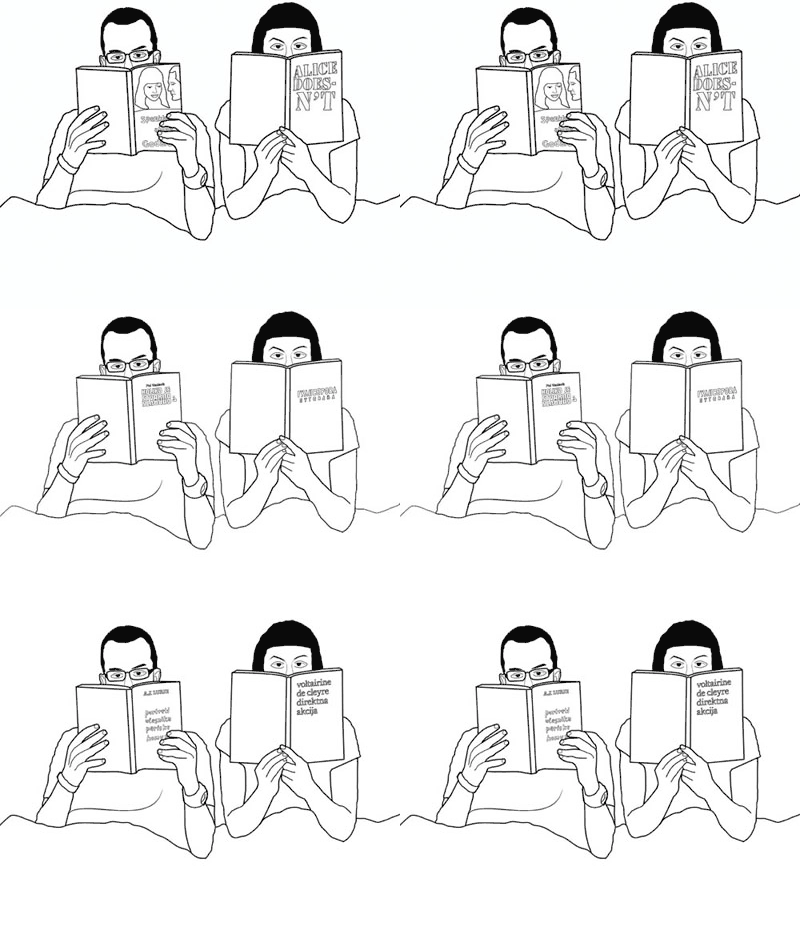 doplgenger* is an artist duo from Belgrade consisting of Isidora Ilić and Boško Prostran. The work of doplgenger deals with the relation between art and politics by exploring the regimes of moving images and the modes of their reception. They rely on the tradition of experimental and avant-garde film and through some of the actions of these traditions intervene in the existing media products or work in expanded cinema forms. Although their main media is moving image, their work is realised through text, installations, performances, lectures and discussions. All of these media are treated in their materiality and in relation to other media, and as carriers of meaning structures through which the social and political reality is structured.
doplgenger have participated at 22nd Biennial Sesc_Videobrasil, OSTRALE Biennial O21, Videonale, while their work has been presented at institutions such as RISO Museo d’Arte Contemporanea della Sicilia, Museum Wiesbaden, Centre Pompidou, Stedelijk Museum Bureau Amsterdam, Osage Gallery Hong Kong, Museum of Contemporary Art Vojvodina, and film festivals including the International Film Festival Rotterdam, Seattle International Film Festival, Kassel Documentary Film and Video Festival, EMAF Osnabrück, Oberhausen International Short Film Festival, Vienna Shorts etc. doplgenger are recipients of international scholarships, film awards and “Vladislav Ribnikar” Award of the daily newspaper Politika. Works of doplgenger are part of public collections in Serbia.
-------
*doplgenger is the Serbian transcription for doppelgänger, a German word which is the usual literary term for common phenomenon of double and which literally means “double-goer”. Doppelgänger is a stranger, a foreigner, an outsider, a social deviant, anyone whose origins are unknown or who has extraordinary powers, who tends to be set apart as evil. The double is defined as evil precisely because of its difference and being a possible disturbance to the familiar and the known. It defines space outside the dominant value system. It is in this way that the double traces the unsaid and unseen of culture: that which has been silenced, made invisible, made “absent”. It threatens to dissolve dominant structures, it points to or suggests the basis upon which the cultural order rests – the unified individual.
CLICK HERE to read more about the exhibition Hope is a Discipline and the 60th October Salon...