New Thematic Exhibition at the Museum of African Art
WHEN MASKS DANCE: OBJECTS FROM THE MAU COLLECTION IN LIGHT OF THE LIVING HERITAGE OF BURKINA FASO
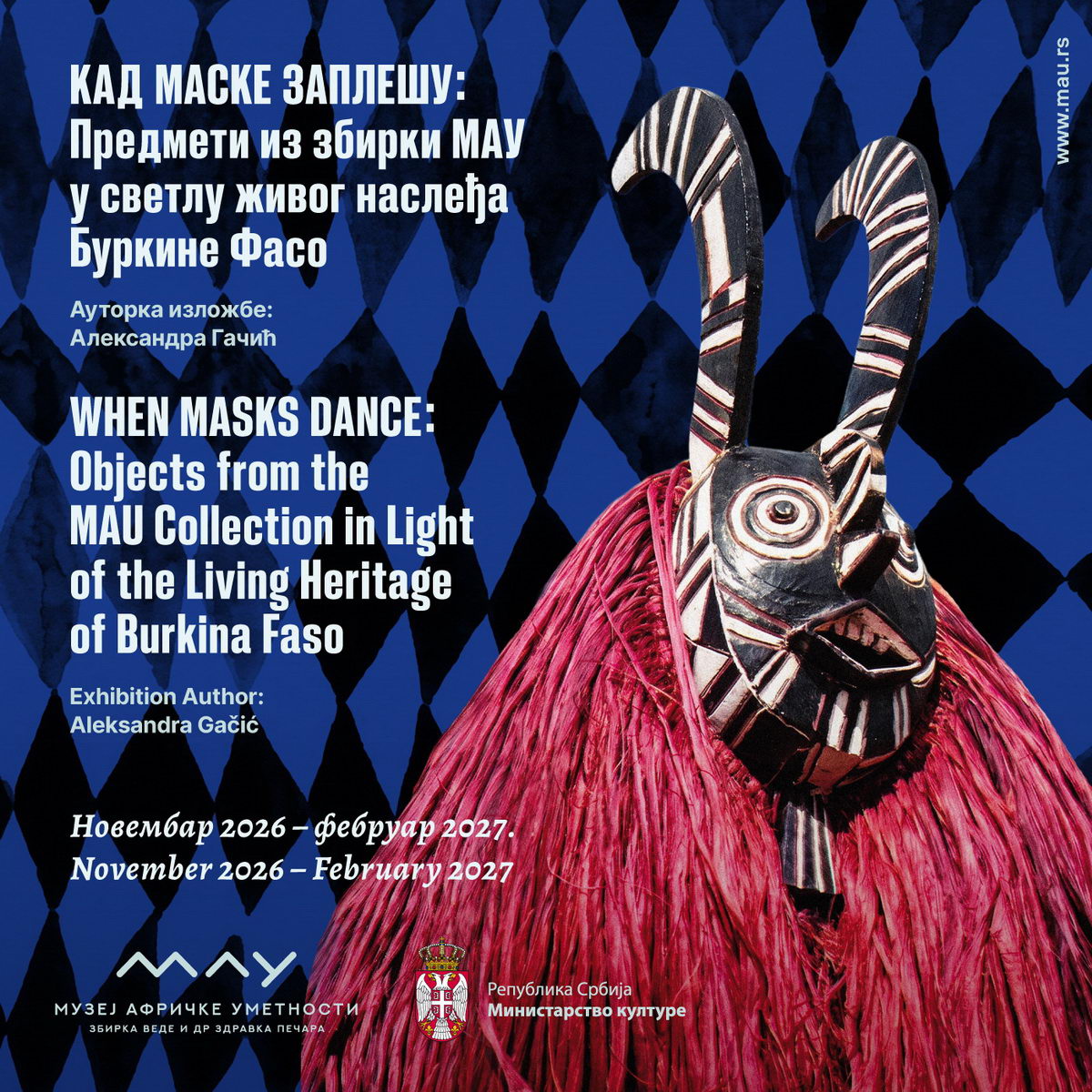 Opening: Thursday, 19 November 2026, at 6 p.m.
Exhibition author: Aleksandra Gačić
What happens when a museum mask comes to life through movement, dance and rhythm? What meanings does it hold beyond the display case, and what role does it play in the lives of the communities from which it originates? These are the questions explored by the new thematic exhibition “When Masks Dance: Objects from the MAU Collection in Light of the Living Heritage of Burkina Faso”, curated by Aleksandra Gačić. The exhibition introduces visitors to the Museum of African Art to the rich and diverse masquerade traditions of this West African country.
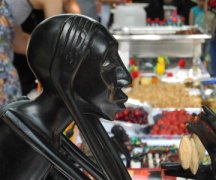
Masquerades – ritual performances combining masks, costumes, dance and music – are an important form of intangible cultural heritage. At the heart of the exhibition is the mask: a visually expressive, carefully carved and decorated object that bears witness to the wealth of artistic expression and symbolic meaning in the cultures of different communities in central and southern Burkina Faso. Yet its role extends far beyond its visual form: a mask acquires its full meaning only through movement, as part of a complex ritual performance. It then becomes a mediator between the earthly and spiritual worlds, the individual and the community, the young and the old, connecting inherited values with contemporary social and cultural life.
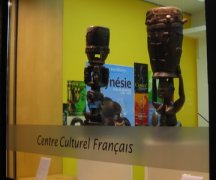
The exhibition presents masks from the collections of the Museum of African Art, most of which were collected during the diplomatic postings of Veda Zagorac and Dr Zdravko Pečar in West African countries – Mali and what was then Upper Volta (now Burkina Faso) – in the 1960s and 1970s. The display is complemented by postage stamps, postcards, bronze ornaments and batik paintings from the Museum’s collections, offering broader insight into the social, historical and cultural context of these traditions.
Archival and contemporary video footage adds particular value to the exhibition, allowing visitors to see masks in their original context – as part of living ceremonies, rituals and celebrations. Selected recordings from the archive of Christopher D. Roy (1947–2019), an art historian and professor at the University of Iowa, document masquerade traditions in Burkina Faso from the 1960s to the first decade of the 21st century. This historical material is complemented by contemporary footage of festival masquerades recorded by the Kumakonda tourism organisation.
An important contribution to the exhibition and its accompanying catalogue has come from collaboration with experts from Burkina Faso, established with the invaluable support of the Embassy of Burkina Faso in Vienna. Their insights offer a more direct understanding of the contemporary practice and preservation of these traditions. Dr Léonce Ki, Executive Secretary of the Association for the Preservation of Masks and the Safeguarding of Mask Traditions (ASAMA), presented the history and significance of FESTIMA (Festival International des Masques et des Arts), a festival bringing together bearers of masquerade traditions from across West Africa. Museum curator Mickaël Boundjoa Lompo highlighted the role of the National Museum of Burkina Faso in preserving and presenting this heritage, while Aguibou Bougobali Sanou, choreographer and Associate Professor at Grinnell College in Iowa, explored the evolution of masquerade dance from ritual performance to contemporary stage presentation.
Bringing together museum objects, archival recordings and contemporary perspectives, “When Masks Dance” invites visitors to see the mask not merely as an art object, but as part of a living cultural heritage that continues to evolve, renew itself and be passed down through generations.
The exhibition will be on view until the end of February 2027.